Top 5 Pachmarhi Hidden Gems Most Visitors Miss
By reo r
04.09.2026
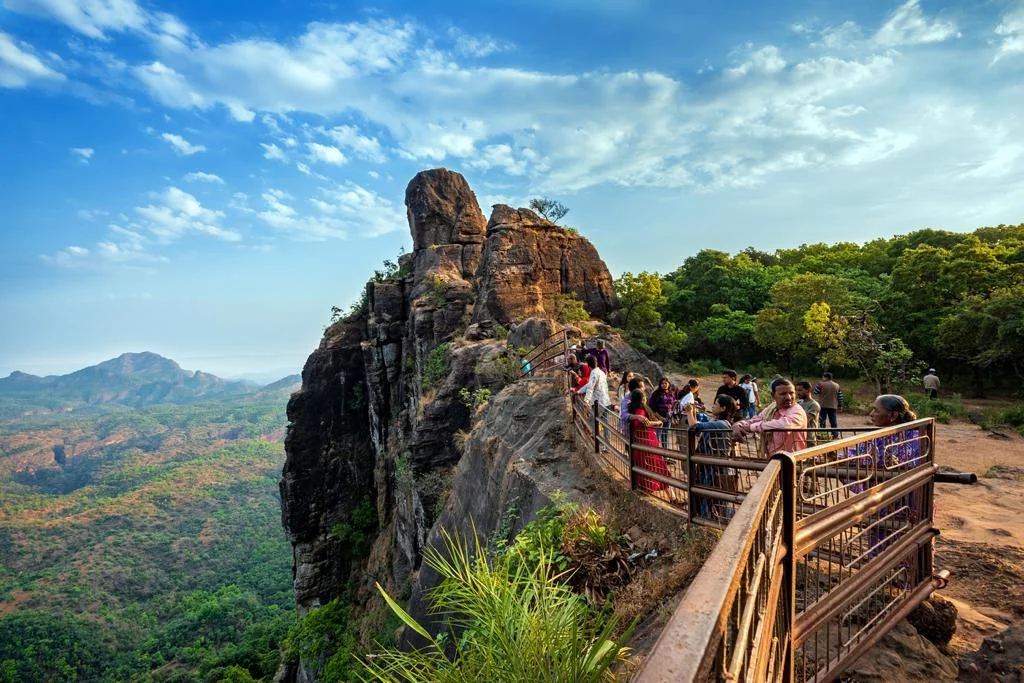
Every hill station has two versions of itself: the one on the postcards, and the one locals quietly keep to themselves. In Pachmarhi, that first version is Bee Falls at midday, packed with day-trippers, and Dhoopgarh at sunrise, lined with photographers. Both are worth it. But spend three or four days here and a different Pachmarhi starts to show through — waterfalls reached by forest trails instead of paved paths, viewpoints with no one else on them, a museum nobody thinks to visit between treks.
This guide covers five of those places. None of them require special permits or expert-level fitness, but all of them ask a little more of you than the main circuit does — a longer walk, a bit of route-finding, a willingness to not have a signpost every hundred meters. In exchange, you get a version of Pachmarhi that feels genuinely undiscovered, even in peak season.
Before You Go: Planning a Hidden-Gems Day
These five sights vary a lot in difficulty and time commitment, so it's worth planning them deliberately rather than squeezing them in as an afterthought.
Difficulty at a glance:
- Easy, near town: Apsara Vihar, Bison Lodge Museum — both walkable, no trekking gear needed
- Moderate trek: Priyadarshini Point, Duchess Falls — a few kilometers of walking, sturdy shoes recommended
- Full-day trek: Nagdwari — 5–6 hours round trip, early start required
What to bring: A local map or offline GPS route, more water than you think you'll need, and snacks — none of these spots have the small tea stalls and vendors you'll find near Bee Falls or Dhoopgarh.
When to go: Outside monsoon season for the trekking-heavy spots (Duchess Falls, Nagdwari), since trails get slippery and stream crossings can become genuinely difficult. The easier, near-town spots (Apsara Vihar, Bison Lodge) work fine year-round.
Local guides: For Duchess Falls and Nagdwari especially, hiring a local guide through your hotel or a town operator is worth the small cost — trails aren't always clearly marked, and a guide will also know current conditions that don't show up online.
1. Duchess Falls (Rajendragiri Falls)
Duchess Falls doesn't announce itself the way Bee Falls does. There's no clear viewing platform, no crowd gathered at the base — just a series of stepped cascades that reveal themselves gradually as you follow the stream through the forest. The name comes from the colonial era, when it was apparently a favorite spot of a visiting duchess; locals also know it as Rajendragiri Falls.
Distance and difficulty: Roughly 3 km of trekking from the nearest road access, crossing the stream several times along the way. Moderate difficulty — not technical, but not a casual stroll either.
Best time: September to November, right after monsoon, when the water is still flowing strong but the trail has dried out enough to be manageable.
The experience: Because the walk in takes real effort, you'll likely have long stretches of the trail — and often the falls themselves — entirely to yourself. Bring a guide or at least a downloaded map; the path isn't consistently marked.
Combine with: This works well as a half-day outing on its own, ideally in the morning before the heat sets in.
2. Apsara Vihar (Fairy Pool)
Local legend holds that fairies once bathed in this clear, spring-fed pool tucked into the rock a short walk from town — which is a charming story, and also a fairly accurate description of how the place actually looks. Unlike Bee Falls, which draws a steady stream of visitors all day, Apsara Vihar tends to stay quiet even on weekends, largely because it's easy to walk past without noticing.
Distance and difficulty: A short, easy walk from the town center — the most accessible entry on this list, suitable for almost anyone.
Best time: Year-round, though the water is at its clearest and coldest in winter (December–February).
The experience: All the appeal of a swimmable natural pool, without needing to fight for space at the water's edge. A good spot for an unhurried hour rather than a quick photo stop.
Combine with: Bison Lodge Museum, since both are close to town and can be done together in a single relaxed morning.
3. Priyadarshini Point (Forsyth Point)
Named after Captain James Forsyth, the British officer often credited with first documenting Pachmarhi for colonial India in the 1860s, Priyadarshini Point looks out over the same plateau you'll see from Dhoopgarh — just without the sunrise crowd. It's less dramatic in elevation but arguably more peaceful, and the late-afternoon light here rivals anything you'll catch at the more famous viewpoints.
Distance and difficulty: A short drive followed by a brief walk to the viewpoint — easy, suitable for most fitness levels.
Best time: Late afternoon, both for the light and because it's when the point is emptiest.
The experience: Genuine panoramic views of the Satpura plateau with a fraction of the foot traffic you'd find at Pachmarhi's better-known lookouts.
Combine with: A good alternative to Dhoopgarh if you'd rather not do a pre-dawn trek, or a second, quieter viewpoint if you've already done Dhoopgarh earlier in your trip.
4. Bison Lodge Museum
Most Pachmarhi itineraries are built entirely around the outdoors, which means Bison Lodge — a colonial-era heritage building turned natural history museum — gets skipped almost by default. That's a missed opportunity: the exhibits on the region's wildlife, geology, and its history as a British hill station retreat add real context to the caves and forests you'll have already walked through by day two or three.
Distance and difficulty: Located in town, an easy walk from most accommodations. No physical effort required.
Best time: Any time — this is an indoor stop, genuinely useful for a hot afternoon or a break between treks.
The experience: A slower, more reflective counterpoint to a trip otherwise built around waterfalls and viewpoints. Worth an hour, even if history museums aren't usually your thing.
Combine with: Apsara Vihar, or as a rest-day activity between two more demanding trekking days.
5. Nagdwari
The most remote entry on this list by a wide margin, Nagdwari is a small, sacred cave shrine reached via a long trek through some of the most untouched forest on the Pachmarhi plateau. It draws pilgrims during a specific annual festival, but for the rest of the year it sees very few visitors at all — making it as close to true wilderness as Pachmarhi gets.
Distance and difficulty: A demanding trek, typically 5–6 hours round trip. This is a full-day commitment, not something to squeeze in alongside other sights.
Best time: Outside monsoon season, when the trail is at its driest and safest. An early start is essential.
The experience: Dense, largely untouched forest, and a genuine sense of remoteness that's hard to find elsewhere in Pachmarhi. Not for a rushed itinerary, but memorable for travelers who want to see the plateau at its wildest.
Combine with: Nothing else — treat this as a dedicated day on its own, with an early departure and a guide who knows the current trail conditions.
Frequently Asked Questions
Are these spots safe to visit without a guide? Apsara Vihar, Priyadarshini Point, and Bison Lodge are straightforward, well-trafficked, and safe to visit independently. Duchess Falls and Nagdwari involve longer, less-marked forest trails with stream crossings — a local guide is strongly recommended for both, and close to essential for Nagdwari.
Which hidden gem is best for a short visit? Apsara Vihar or Bison Lodge — both sit close to town and can be done in an hour or two without any trekking commitment.
Is Nagdwari worth the long trek? If you have a full day to spare and want to see Pachmarhi's wildest, least-visited corner, yes. If your schedule is tight, it's the first one to cut — the other four spots deliver more per hour invested.
Do these hidden gems require permits, unlike Satpura National Park? No, none of the five require permits. Duchess Falls and Nagdwari do pass through forest areas, so it's worth checking locally for any seasonal access restrictions before setting out, particularly just after monsoon.
How many of these can I realistically fit into a 3-day trip? If you're following a standard 3-day Pachmarhi itinerary built around the main sights, Apsara Vihar and Bison Lodge fit easily into a spare morning or afternoon. Duchess Falls, Priyadarshini Point, and Nagdwari each need dedicated time, so pick one or two based on how much trekking you've already got planned.
Where to Stay
A quieter, off-the-beaten-path trip pairs naturally with a quieter place to stay. WOWSTAYZ Misty Meadows offers exactly that — green, peaceful surroundings that match the pace of a hidden-gems itinerary. If you're prioritizing Duchess Falls or Nagdwari and want to minimize travel time to the trailheads, WOWSTAYZ Ecotel is the more central, practical base.
Pachmarhi rewards travelers who look past the postcard spots — the plateau has more to it than any single day-tour can cover. Check availability and plan your stay with WOWSTAYZ before you set out to find them.
Popular
Top 10 Places to Visit in Pachmarhi: A Complete 2026 Guide
Dharamkot: The "Mini Israel" of India — Cafés, Treks & Where to Stay
Dalhousie – The Timeless Himalayan Retreat
Summers in Dharamkot
3-Day Pachmarhi Itinerary: The Perfect Weekend Getaway
Top 5 Pachmarhi Hidden Gems Most Visitors Miss
Top 10 Places to Visit in Dalhousie: A Complete 2026 Guide
Best Time to Visit Dalhousie: Season-by-Season Guide (2026)
Dalhousie Snowfall: Which Months It Snows & Where to See It (2026 Guide)
Dalhousie in October: Weather, What to Pack, and Where to Go
Dalhousie in September: Post-Monsoon Weather & Tips
Top 10 Best Resorts in Dalhousie for a Peaceful Himalayan Getaway (2026 Guide)

How to Reach Dalhousie: Distance & Route Guide from Delhi, Chandigarh, Amritsar
WOW STAYZ2 Ashoka Grand vs Staying Near Gandhi Chowk: Which Should You Book?
Dalhousie in November: Weather, What to Expect & What to Pack
Khajjiar: Complete Guide to the "Mini Switzerland of India"
The Lodge, Dharamkot vs Staying in McLeodganj: Which Should You Book?
Hotels Near Khajjiar: Why Ashoka Grand is the Smarter Base